Generator Maintenance: a generator maintenance schedule
Home >
Blog >
Generator Maintenance: a generator maintenance schedule
Owning a generator is no longer considered a luxury. For businesses, manufacturing facilities, healthcare institutions, logistics centers, and residential properties, backup power has become a necessity. However, even the most reliable equipment cannot operate flawlessly for years without proper care. That is why generator maintenance should follow a well-defined schedule rather than being performed only after problems arise.
Regular maintenance helps prevent costly repairs, preserves engine lifespan, minimizes the risk of unexpected failures, and ensures the generator is always ready to operate when needed. This is especially important for industrial diesel generators, which often run under heavy loads for extended periods.
Why you should never skip generator maintenance
Many owners assume that if the generator starts without issues, it does not require inspection. In reality, this is one of the most common mistakes. Many faults develop gradually and remain unnoticed until they become serious.
Routine maintenance helps to:
maintain stable equipment performance;
reduce fuel consumption;
prevent premature engine wear;
extend the overall service life of the generator;
avoid expensive major repairs;
ensure safe operation.
Regular inspections are particularly important for businesses where even a short power outage can result in financial losses or production downtime.
What determines the maintenance schedule?
There is no universal maintenance schedule suitable for every generator. Service intervals are established by the manufacturer and depend on several factors:
total engine operating hours;
operating conditions;
generator capacity;
ambient temperature;
fuel quality;
dust levels in the environment;
length of idle periods.
For example, even if a generator serves only as a standby power source, scheduled maintenance remains essential regardless of the number of operating hours. Engine oil deteriorates over time, fuel loses its properties, rubber seals dry out, and electrical contacts may oxidize.
Daily and Weekly inspections
If the generator is used regularly, operators should perform a brief inspection before each startup.
Basic checks include:
checking the engine oil level;
inspecting the coolant level;
examining the fuel system;
checking for leaks;
inspecting the battery condition;
visually examining cables and electrical connections.
These simple procedures take only a few minutes but can help detect potential issues before they develop into serious failures.
Maintenance every 100–250 operating hours
This is considered one of the most critical maintenance intervals.
Typical maintenance tasks include:
changing the engine oil;
replacing the oil filter;
cleaning or replacing the air filter;
inspecting drive belts;
checking fastener tightness;
diagnosing the starting system.
If the generator operates in dusty environments or under high temperatures, maintenance intervals may need to be shortened.
Maintenance after 500 operating hours
At this stage, the maintenance checklist becomes more comprehensive.
Technicians usually inspect:
the fuel filter;
fuel injectors;
the turbocharger (if installed);
the cooling system;
the alternator;
winding insulation;
electronic control systems.
Modern generators are also subjected to advanced computer diagnostics, allowing technicians to identify hidden faults before they affect performance.
Maintenance after 1,000 operating hours
At this point, comprehensive scheduled maintenance is required.
Typical procedures include:
replacing fuel filters;
replacing the coolant;
inspecting the valve mechanism;
adjusting valve clearances;
cleaning the fuel system;
load testing the generator;
testing the Automatic Transfer Switch (ATS).
For high-capacity power systems, a complete professional inspection of all major components is often carried out after every 1,000 operating hours.
Annual generator maintenance
Even if the generator has seen little or no use during the year, a full annual inspection remains essential.
During annual maintenance, specialists typically evaluate:
the condition of the fuel tank;
battery charge level;
automatic control systems;
electrical contact groups;
pipeline and hose integrity;
cooling system performance;
voltage and frequency output.
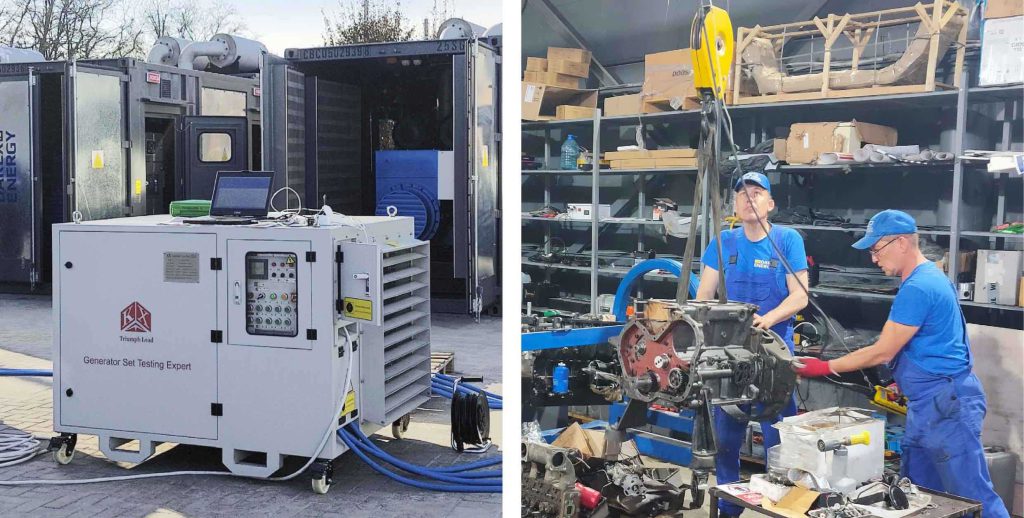
A load test is also recommended to verify that the generator can reliably operate under real working conditions during a power outage.
Why professional maintenance matters
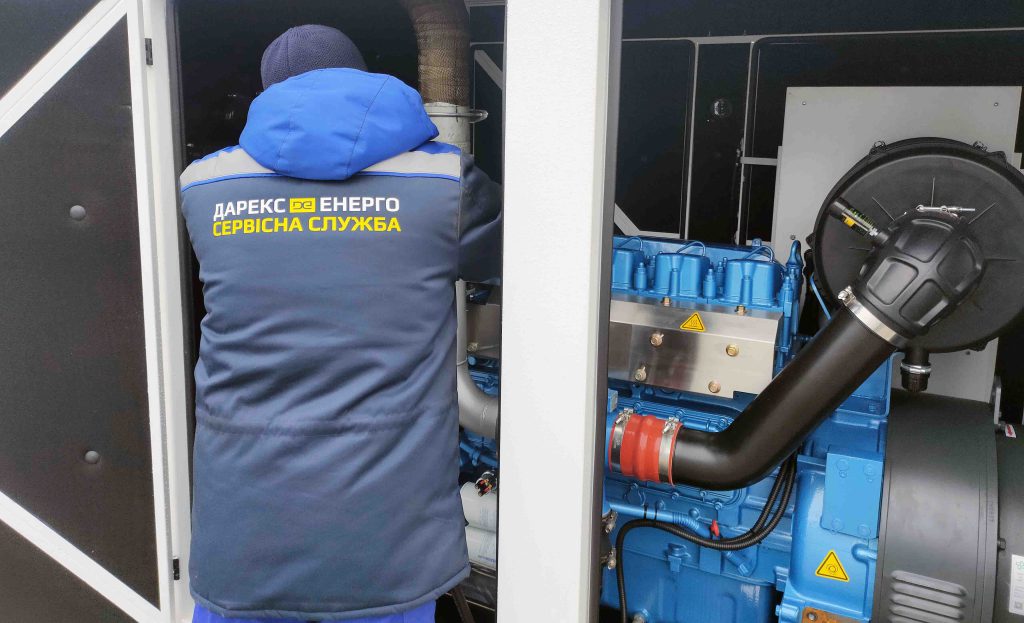
While owners can perform some routine inspections themselves, most scheduled maintenance requires specialized tools, diagnostic equipment, and technical expertise.
Professional generator maintenance services involve much more than replacing consumables. Qualified engineers perform comprehensive diagnostics of the engine, alternator, fuel system, and control systems, assess component wear, and identify potential issues before they lead to costly breakdowns or unexpected shutdowns.
Professional service is especially important when operating industrial diesel generators, as repair costs for high-capacity equipment can easily exceed the cost of regular preventive maintenance many times over.
A generator is often a critical piece of equipment that ensures uninterrupted business operations or provides comfort and safety at home. That is why waiting for a malfunction before taking action is never a good strategy. Following a regular maintenance schedule, using high-quality replacement parts and consumables, and relying on professional generator maintenance services will significantly extend the lifespan of your equipment, reduce operating costs, and ensure your generator remains fully prepared whenever backup power is required. Preventive maintenance is always more cost-effective than repairing major failures, making it one of the smartest investments in the reliability of any backup power system.
How to choose a reliable generator supplier in Ukraine
When electricity is essential for the uninterrupted operation of a business, production facility, office, or private home, a generator becomes more than just additional equipment — it becomes part of the power supply system. The reliability of the generator affects equipment operation, product safety, people’s comfort, and even the safety of certain processes. However, choosing […]
Generator for a farm: key selection considerations
For a farm, electricity is not just a matter of comfort but an essential condition for stable operations. Pumps, ventilation systems, refrigeration equipment, lighting, automation systems, grain dryers, and other machinery can operate only with a reliable power supply. A prolonged power outage can disrupt production processes, lead to product spoilage, and cause financial losses. […]
How to choose a generator for a private house with solar panels
Solar panels allow a private house to partially or fully cover its electricity needs without constant dependence on the grid. However, even a well-designed solar power system has its limitations. At night, there is no solar generation, panel output decreases in cloudy weather, and in winter, daylight hours are significantly shorter. If electricity is needed […]



 Kyiv
Kyiv
