A diesel or gasoline generator is designed for long-term operation, but even a reliable power generator can overheat. An increase in engine temperature is not just a minor technical issue. Continuing to operate the unit in this condition can result in engine damage, component deformation, degraded oil properties, and costly repairs.
Overheating most often occurs due to problems with the cooling system, excessive load, insufficient ventilation, or improper operation. It is important not to ignore the first signs of a problem and identify the cause before the generator suffers serious damage.
How to tell if a generator is overheating
Modern generator sets are usually equipped with temperature sensors and protection systems that can automatically shut down the engine when critical temperature levels are reached. However, you should not rely solely on automatic protection.
Signs of overheating may include:
an increase in coolant temperature;
a warning indicator being activated;
automatic generator shutdown;
an unusual smell coming from the engine;
steam or smoke around the cooling system;
unstable engine operation;
reduced power output;
an excessively hot housing or individual components.
If the generator starts operating differently than usual, it is better not to wait until serious symptoms appear. Timely diagnostics can often help resolve the problem at a much lower cost.
The first step when a generator overheats – shut it down
If the temperature is rising rapidly or the overheating protection system has been activated, the generator should be shut down according to the manufacturer’s instructions. Do not continue operating the unit simply to “get through” the remaining power outage.
After shutdown, the engine must be allowed to cool down. Do not open the radiator cap immediately after operation: the coolant may be under high pressure and can cause serious burns.
Once the unit has cooled sufficiently, a preliminary inspection can be performed. If the cause is obvious and related, for example, to restricted airflow, the problem can sometimes be resolved without professional assistance. However, serious faults require professional diagnostics.
Low coolant level
One of the most common causes of overheating is an insufficient amount of coolant.
The coolant level should be checked according to the manufacturer’s recommendations and only when the engine is cool. If the coolant level regularly drops, simply topping it up is not enough. This may indicate a leak in the radiator, hoses, connections, water pump, or other components of the cooling system.
A consistently decreasing coolant level is a reason to perform a complete inspection. Operating a generator with insufficient coolant can result in serious engine damage.
Dirty radiator
Over time, the radiator surface can become covered with dust, dirt, fluff, insects, and other contaminants. This happens especially quickly when a generator is installed on a construction site, in a manufacturing facility, or in another dusty environment.
Contamination restricts normal airflow through the radiator. As a result, heat is removed less efficiently and the engine temperature rises.
The radiator should be inspected and cleaned regularly according to the manufacturer’s recommendations. At the same time, care must be taken not to damage the radiator fins with excessive water pressure or mechanical force.
Problems with the fan and drive belt
The cooling system depends on more than just the radiator. The cooling fan plays an important role by providing the necessary airflow.
If the fan is not operating correctly, is damaged, or has mechanical problems, cooling efficiency can decrease significantly. A loose or damaged drive belt can also be the cause.
Unusual noise, excessive play, vibration, or a characteristic squealing sound during operation may indicate a problem. In such a situation, it is better not to operate the generator until it has been inspected.
Water pump failure
The water pump plays an important role in liquid-cooled systems. It ensures circulation of coolant between the engine and radiator.
If the pump is not operating properly, heat is not removed from the engine effectively. The coolant level may remain normal while the engine temperature continues to rise.
Identifying a water pump failure without the appropriate technical knowledge is not always possible. Therefore, if overheating occurs repeatedly and the cause is not obvious, professional assistance should be sought.
Generator overload
Another common cause of overheating is operating a generator under a load that exceeds its rated capacity.
When too much equipment is connected to the unit, the engine and alternator operate under increased load. This increases heat generation and may cause the protection system to activate.
When selecting a power generator, it is important to correctly calculate the total power consumption and account for the starting currents of electric motors, pumps, compressors, and other equipment.
If the electrical load of a company or facility has increased, the generator that previously handled the requirements may no longer have sufficient power reserve.
High ambient temperature
In hot weather, it is more difficult for a generator to dissipate heat. If the unit operates in a poorly ventilated room, the temperature can rise even faster.
During installation, sufficient fresh-air intake and effective removal of hot air and exhaust gases must be provided. The generator should never be positioned in a way that allows hot air to flow back toward the radiator.
Special attention should be paid to containerized generator sets and generators installed in dedicated rooms. The ventilation system must be properly sized for the engine’s power and operating conditions.
Improper or untimely maintenance
Regular maintenance is one of the most effective ways to prevent overheating.
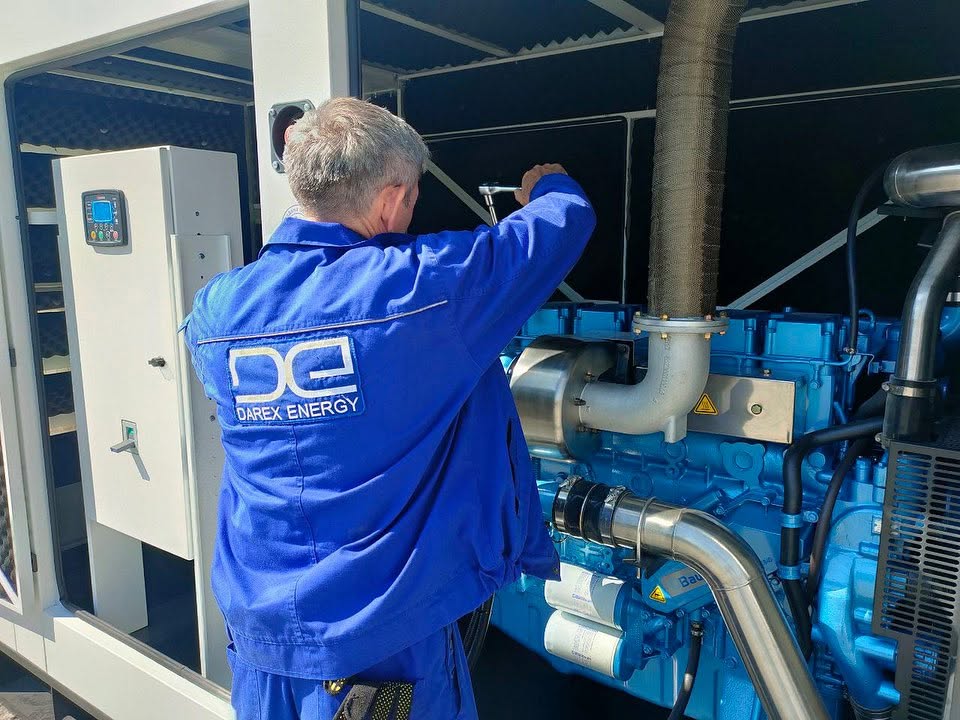
During scheduled maintenance, technicians inspect the cooling system, radiator, hoses, belts, fan, water pump, fluid levels, and other components.
That is why generator servicing should not be treated as a formality. Preventive maintenance makes it possible to identify worn components before they cause a serious failure.
Maintenance intervals depend on the specific model, operating conditions, and manufacturer’s recommendations. A generator that is used frequently or operates under significant loads requires particular attention.
Can you continue operating a generator after overheating?
This depends on the cause and severity of the overheating. If the unit overheated once due to an obvious external cause, its operation may be resumed after the problem has been eliminated and all systems have been inspected, provided this is consistent with the manufacturer’s recommendations.
However, if the generator overheats repeatedly, continuing to operate it can be dangerous. Repeated temperature increases may indicate a malfunction in the cooling system, engine, or electrical components.
In such cases, a complete diagnostic inspection is required rather than simply eliminating the symptoms temporarily.
How to prevent generator overheating
It is much easier to prevent overheating than to deal with its consequences. Follow these basic rules:
do not exceed the generator’s rated load;
regularly check the coolant level;
keep the radiator clean;
inspect the fan and drive belts;
use technical fluids recommended by the manufacturer;
ensure proper ventilation;
do not ignore warning indicators;
perform scheduled maintenance;
periodically start the backup generator to verify that it is operating correctly.
If the equipment is used intensively, it is useful to keep a record of operating hours and maintenance. This helps monitor service intervals and ensures that scheduled procedures are performed on time.
Proper generator selection also matters
Overheating is not always caused by a malfunction. Sometimes the problem is that the generator was originally selected incorrectly for the specific operating conditions.
Before you buy a generator, it is important to determine the required power output, load characteristics, expected operating duration, installation location, and environmental conditions. For industrial or mission-critical facilities, it is also advisable to consider potential future increases in electrical demand.
A generator with sufficient power reserve and a properly designed cooling system will operate more reliably and have a lower risk of overheating.
Generator overheating is a warning sign that should never be ignored. It can be caused by a low coolant level, a dirty radiator, a faulty fan or water pump, excessive load, inadequate ventilation, or a lack of timely maintenance.
If the engine temperature starts rising, the first step is to safely shut down the unit and allow it to cool. The cause of the problem should then be identified. If the cause is unclear or overheating occurs repeatedly, it is best to contact qualified specialists.
Proper operation, professional installation, and regular maintenance can extend the generator’s service life and reduce the risk of expensive failures. A reliable power generator should not simply start when the electricity goes out — it should operate steadily throughout the entire period when backup power is required.
How to choose a reliable generator supplier in Ukraine
When electricity is essential for the uninterrupted operation of a business, production facility, office, or private home, a generator becomes more than just additional equipment — it becomes part of the power supply system. The reliability of the generator affects equipment operation, product safety, people’s comfort, and even the safety of certain processes. However, choosing […]
Generator for a farm: key selection considerations
For a farm, electricity is not just a matter of comfort but an essential condition for stable operations. Pumps, ventilation systems, refrigeration equipment, lighting, automation systems, grain dryers, and other machinery can operate only with a reliable power supply. A prolonged power outage can disrupt production processes, lead to product spoilage, and cause financial losses. […]
How to choose a generator for a private house with solar panels
Solar panels allow a private house to partially or fully cover its electricity needs without constant dependence on the grid. However, even a well-designed solar power system has its limitations. At night, there is no solar generation, panel output decreases in cloudy weather, and in winter, daylight hours are significantly shorter. If electricity is needed […]



 Kyiv
Kyiv
