Generator Grounding: safety rules
Home >
Blog >
Generator Grounding: safety rules
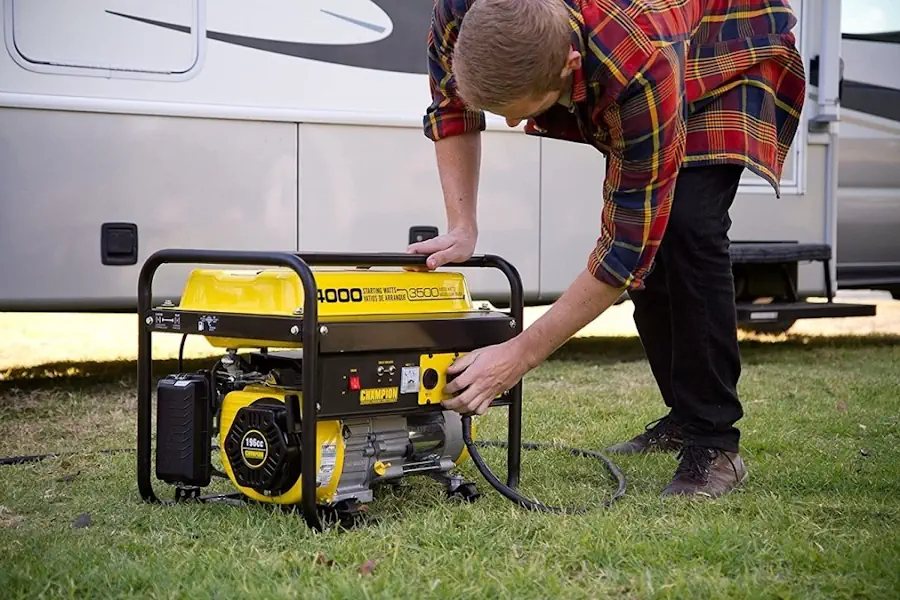
Proper generator grounding is one of the key conditions for its safe and stable operation. Many users underestimate this aspect, focusing only on power output or equipment type. However, grounding protects not only the equipment but also human life. Let’s explore why it is so important and how to properly set up the system.
What is grounding and why is it needed
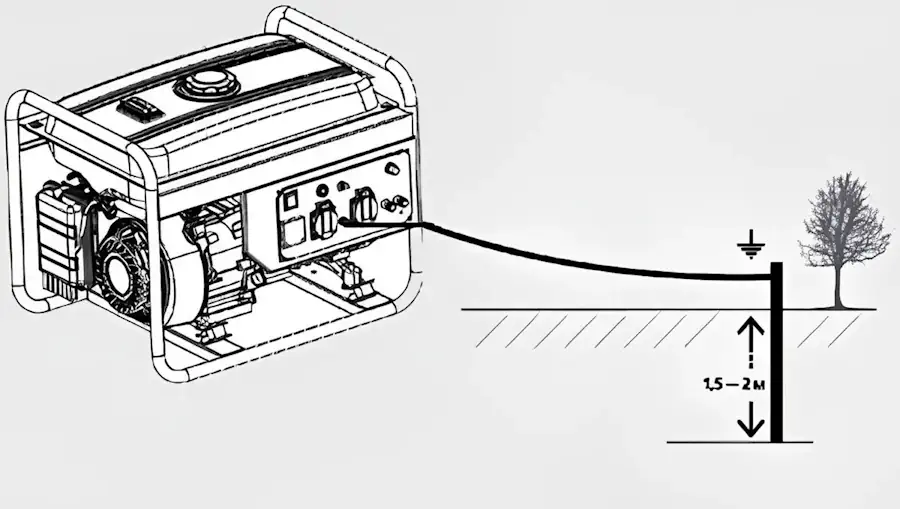
Grounding is the connection of a generator’s корпус to the earth through a dedicated conductor. Its main purpose is to safely dissipate dangerous electrical voltage in case of a fault.
In short, grounding performs several important functions:
- protects against electric shock;
- reduces the risk of equipment damage;
- stabilizes the electrical system;
- prevents the buildup of static electricity.
This is especially important when using industrial generators that operate under high loads and include complex electronics.
Is grounding always required?
In most cases, yes. Exceptions may apply only to certain portable models with double insulation that are used to power individual devices.
However, grounding is mandatory if the generator:
- is connected to a home power system;
- is used for extended periods;
- operates outdoors;
- powers multiple devices simultaneously.
This rule applies equally to household units and equipment such as a diesel generator.
Basic grounding rules
To ensure the system works correctly, it is important to follow these basic requirements:
1. Use a quality ground electrode
Typically, this is a metal rod or several electrodes driven into the ground. The material must be corrosion-resistant.
2. Ensure reliable connections
The connection between the generator and the grounding electrode must be secure. Use proper terminals and conductors with the correct cross-section.
3. Proper placement
The grounding electrode should be installed at a safe distance from the building and the generator to avoid affecting the foundation or utilities.
4. Check resistance
Grounding resistance must meet established standards. High resistance reduces the effectiveness of the system.
5. Protection from moisture and damage
All connections should be protected from environmental impact.
Common grounding mistakes
Improper grounding can be even more dangerous than having no grounding at all. The most common mistakes include:
- using random metal structures instead of a proper grounding system;
- weak or oxidized connections;
- undersized wiring;
- ignoring resistance checks;
- connecting to pipes or building reinforcement.
Such errors can lead to serious consequences – from generator failure to electric shock.
Grounding features for different generator types
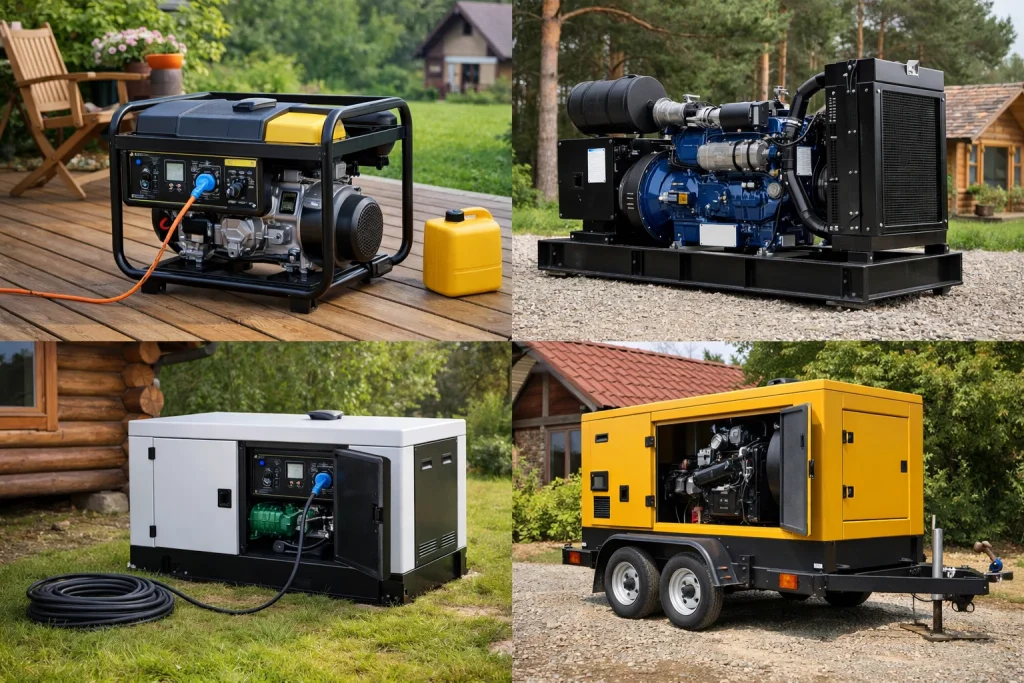
The grounding approach depends on the type of equipment. For example, home generators typically have simpler connection schemes and do not require complex engineering solutions. However, even in this case, it is essential to follow basic safety rules.
For high-power units used in industrial environments, the requirements are much stricter. Professional calculations and installation in accordance with standards are necessary.
Why you should trust professionals
Although basic grounding can be done independently, in most cases it is better to rely on specialists. They will:
- select the appropriate materials;
- perform installation according to standards;
- test the system using specialized equipment;
- provide operational recommendations.
This is especially important for complex or expensive generator systems.
Generator grounding is not just a formality – it is a critically important safety element. It protects people, equipment, and ensures stable operation under any conditions.
Regardless of whether you use a generator at home or in an industrial setting, grounding rules should never be ignored. A proper approach will help you avoid risks and ensure long-term, safe operation of your generator.
Share 
you may also be interested in



 Kyiv
Kyiv
