Home >
Blog >
Automatic Generators: How the ATS System Works
In today’s world, a stable power supply is not just a matter of comfort, but a necessity for businesses, industrial facilities, and even private homes. That is why automatic generators equipped with an ATS system are becoming an increasingly popular solution. They help prevent downtime, data loss, and financial damage. Let’s take a closer look at how this technology works and why it is so effective.
What is an ATS System
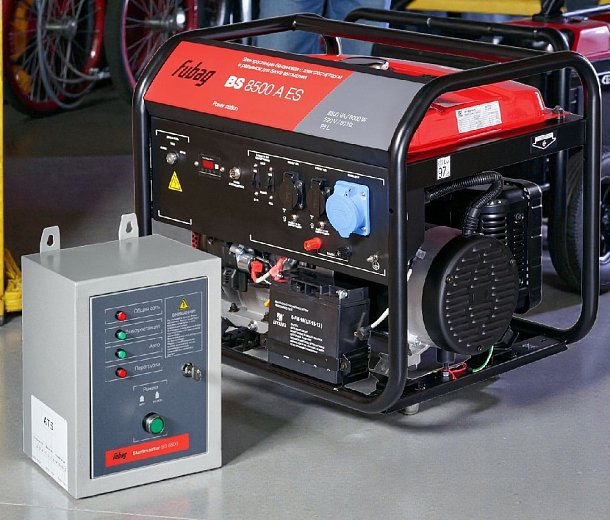
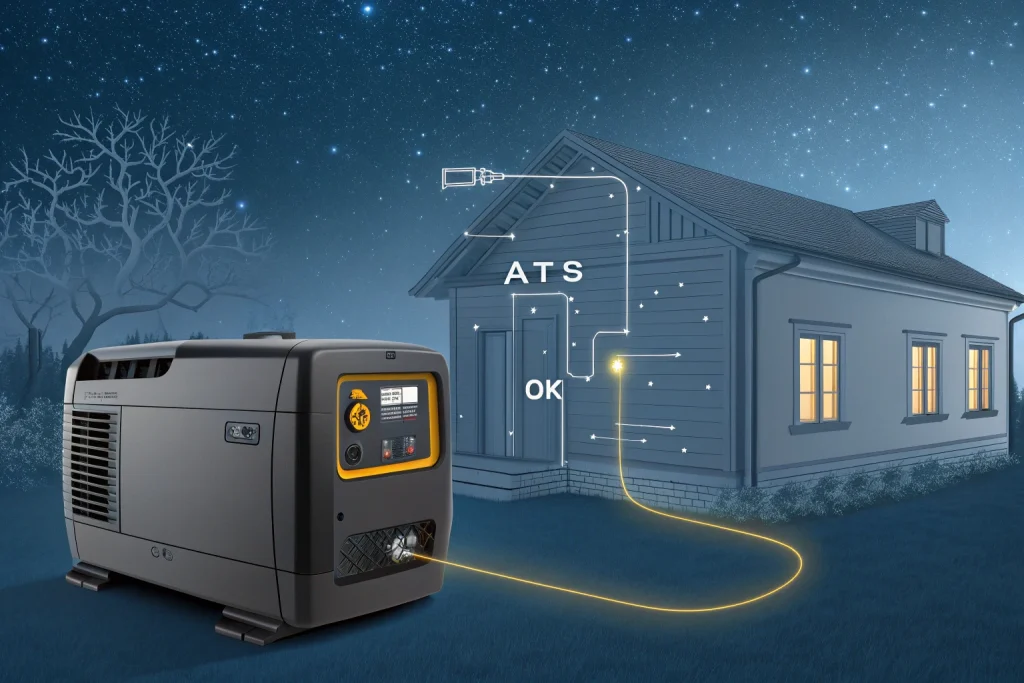
ATS (Automatic Transfer Switch) is an intelligent system that automatically switches power from the main electricity source to a backup source in case of a failure or outage.
Simply put, when the power goes out, the ATS system, without human intervention:
detects the outage;
starts the generator;
transfers the load to the backup power source;
restores the system to normal operation once the main power supply returns.
This process takes from a few seconds to about a minute, which is critical for equipment that must not stop.
How an Automatic Generator with ATS Works
The system operates in several последовательных stages:
1. Voltage Monitoring
The ATS continuously monitors the parameters of the power grid. If the voltage drops below the acceptable level or disappears completely, the system responds instantly.
2. Generator Startup
After detecting a failure, a signal is sent to start the generator engine. In modern models, this happens automatically without operator involvement.
3. Load Transfer
Once the generator reaches stable operation, the ATS switches the building or equipment power supply to the backup source.
4. Return to the Main Grid
After the power supply is restored, the system checks voltage stability and then automatically switches back to the main line and shuts down the generator.
This is a fully autonomous cycle that ensures uninterrupted operation.
Advantages of Generators with ATS
Using automatic backup power systems offers several clear advantages:
Continuity of operation — equipment keeps running even during outages.
Time saving — no need to start the generator manually.
Safety — reduces the risk of equipment damage due to voltage fluctuations.
Autonomy — the system operates without constant human supervision.
Flexibility — suitable for both private homes and large enterprises.
Automatic generators are widely used in various sectors:
industrial enterprises;
medical institutions;
data centers;
retail stores and shopping malls;
private houses and cottages.
They are especially critical in places where even a short power outage can lead to serious consequences.
Which Generator to Choose
The choice of a generator depends on the user’s needs. For smaller facilities, gasoline generators are often used — they are more affordable and easier to maintain. For businesses and industrial use, diesel models are more appropriate, as they have a longer lifespan and can handle continuous loads.
When choosing, it is important to consider:
power capacity;
fuel type;
level of automation;
operating conditions;
availability of an ATS system.
The ATS system is a key component of modern backup power solutions. It ensures an immediate response to power interruptions and helps avoid downtime and losses. By investing in an automatic generator, you gain not only backup power but also full confidence in the stability of your operations.
If you are looking for a reliable solution for your home or business, consider generators with an automatic transfer switch — it is an investment that quickly pays off.
How to choose a reliable generator supplier in Ukraine
When electricity is essential for the uninterrupted operation of a business, production facility, office, or private home, a generator becomes more than just additional equipment — it becomes part of the power supply system. The reliability of the generator affects equipment operation, product safety, people’s comfort, and even the safety of certain processes. However, choosing […]
Generator for a farm: key selection considerations
For a farm, electricity is not just a matter of comfort but an essential condition for stable operations. Pumps, ventilation systems, refrigeration equipment, lighting, automation systems, grain dryers, and other machinery can operate only with a reliable power supply. A prolonged power outage can disrupt production processes, lead to product spoilage, and cause financial losses. […]
How to choose a generator for a private house with solar panels
Solar panels allow a private house to partially or fully cover its electricity needs without constant dependence on the grid. However, even a well-designed solar power system has its limitations. At night, there is no solar generation, panel output decreases in cloudy weather, and in winter, daylight hours are significantly shorter. If electricity is needed […]



 Kyiv
Kyiv
