Three-Phase vs Single-Phase Generators: what is the difference
Home >
Blog >
Three-Phase vs Single-Phase Generators: what is the difference
When choosing a backup power source, many buyers face the question: which generator is better — single-phase or three-phase? At first glance, the difference may seem purely technical, but the correct choice directly affects equipment stability, electrical safety, and generator efficiency.
Today, generator equipment is widely used not only by industrial facilities but also by private homes, shops, offices, warehouses, and construction sites. That is why before you decide to buy generators, it is important to understand the key differences between these types of power plants and choose the right option for your needs.
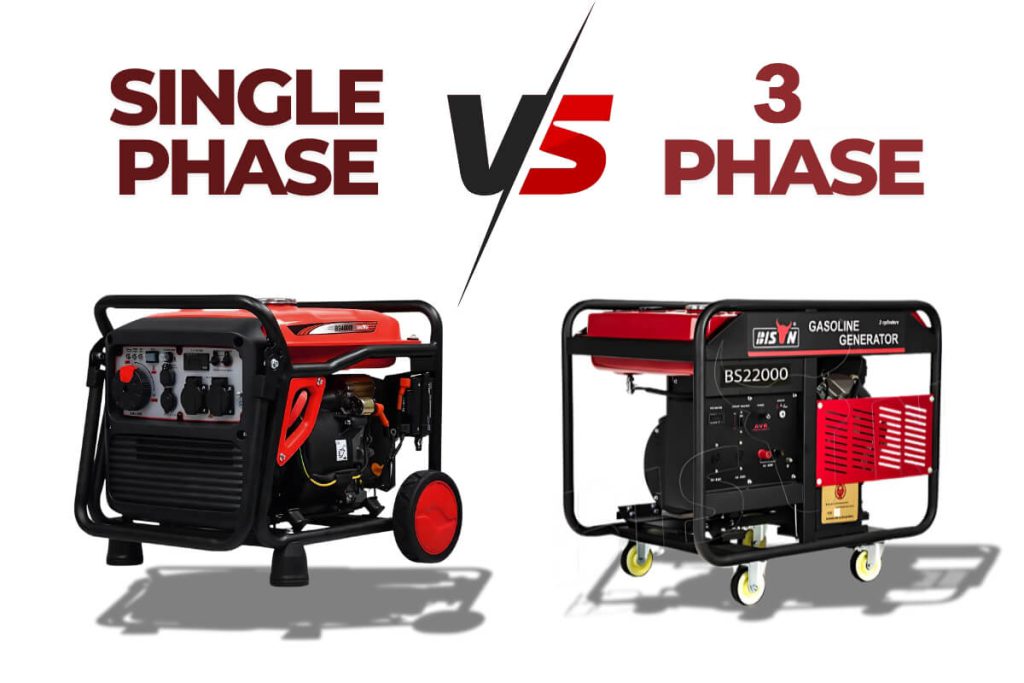
What is a single-phase generator
A single-phase generator produces electricity at 220 V. This is the standard voltage used in most apartments, private houses, and small commercial spaces.
Such generators are typically suitable for:
household appliances;
lighting;
televisions;
refrigerators;
pumps;
computer equipment;
small power tools.
The main advantage of single-phase models is their simplicity and versatility for everyday use. That is why portable generators for home are most often single-phase units.
What is a three-phase generator
A three-phase generator operates at 380 V and is capable of powering much more demanding equipment. These models are used in manufacturing facilities, construction sites, large workshops, and locations with high electricity consumption.
Three-phase generators are required for:
industrial machines;
compressors;
powerful pumps;
welding equipment;
ventilation systems;
heavy construction machinery.
In many cases, connecting professional equipment is simply impossible without a three-phase generator.
Main difference between single-phase and three-phase generators
The key difference lies in the type of power supply and load distribution.
Single-phase generators deliver current through one phase and a neutral wire. They are ideal for standard household needs.
Three-phase models use three separate phases, which allows them to power more demanding equipment and distribute the load more evenly.
However, it is important to understand that if a three-phase generator is used incorrectly or if the load is unevenly distributed between phases, it may lead to overheating and unstable operation.
Which generator is better for home use
For most private homes, a single-phase generator is the optimal solution. Almost all household appliances operate on 220 V, so installing a three-phase unit is often unnecessary.
Today, portable generators for home are especially popular because they are:
compact;
mobile;
easy to operate;
do not require complex installation;
suitable for emergency backup power.
Such generators are easy to transport and can even be used at a summer house or during trips outside the city.
When to choose a three-phase generator
A three-phase generator is necessary when the facility includes equipment operating on 380 V. For example:
woodworking machines;
industrial pumps;
large compressors;
high-power electric motors;
professional air conditioning systems.
Three-phase generators are also commonly used in businesses where stable operation of multiple machines at the same time is required.
Before you buy generators for industrial purposes, it is essential to calculate the load professionally. This helps prevent overloads and ensures stable system performance.
Can a three-phase generator be used for a home?
Technically — yes. However, there is an important nuance: the load across phases must be perfectly balanced. If one phase is overloaded while others are underused, the generator may operate unstably.
That is why a three-phase generator is not always the best solution for a typical home. It is only justified if the house already has a three-phase electrical system and compatible equipment.
In most cases, portable generators for home remain a more practical, cost-effective, and convenient solution.
What to consider when choosing a generator
Before purchasing a generator, several important factors should be considered.
Power Output. You must correctly calculate the total load of all devices you plan to connect.
Fuel Type. The most common options are gasoline and diesel generators. Gasoline models are suitable for short-term use, while diesel generators are better for long-term and intensive operation.
Starting System. Generators may have manual, electric, or automatic start. For home backup power, models with automatic transfer systems are especially convenient.
Noise Level. For residential use, it is important to consider soundproof housing and noise levels during operation.
Mobility. If the generator needs to be moved frequently, compact portable generators for home with wheels and a convenient design are the best choice.
Why it is important to choose high-quality equipment
Cheap, low-quality generators often produce unstable voltage, overheat quickly, and consume more fuel. In addition, such equipment can be dangerous for household appliances and the electrical system.
That is why before you buy generators, you should consider not only the price but also:
manufacturer reputation;
warranty availability;
service support;
component quality;
compliance with technical specifications.
A reliable generator is an investment in stable and safe power supply.
Single-phase and three-phase generators serve different purposes, so the choice depends mainly on the type of equipment and the power requirements of the facility. For apartments, private houses, and small offices, portable generators for home are usually the best solution, providing simple and effective backup power.
Three-phase models are more suitable for industrial use, construction sites, and professional equipment with high energy consumption. Before purchasing, it is important to properly assess the load and the technical characteristics of the electrical system.
With a responsible approach, a high-quality generator ensures stable equipment operation, comfort, and energy independence in any conditions.
How to choose a reliable generator supplier in Ukraine
When electricity is essential for the uninterrupted operation of a business, production facility, office, or private home, a generator becomes more than just additional equipment — it becomes part of the power supply system. The reliability of the generator affects equipment operation, product safety, people’s comfort, and even the safety of certain processes. However, choosing […]
Generator for a farm: key selection considerations
For a farm, electricity is not just a matter of comfort but an essential condition for stable operations. Pumps, ventilation systems, refrigeration equipment, lighting, automation systems, grain dryers, and other machinery can operate only with a reliable power supply. A prolonged power outage can disrupt production processes, lead to product spoilage, and cause financial losses. […]
How to choose a generator for a private house with solar panels
Solar panels allow a private house to partially or fully cover its electricity needs without constant dependence on the grid. However, even a well-designed solar power system has its limitations. At night, there is no solar generation, panel output decreases in cloudy weather, and in winter, daylight hours are significantly shorter. If electricity is needed […]



 Kyiv
Kyiv
