Noise from a Generator: Standards for Residential Areas
Home >
Blog >
Noise from a Generator: Standards for Residential Areas
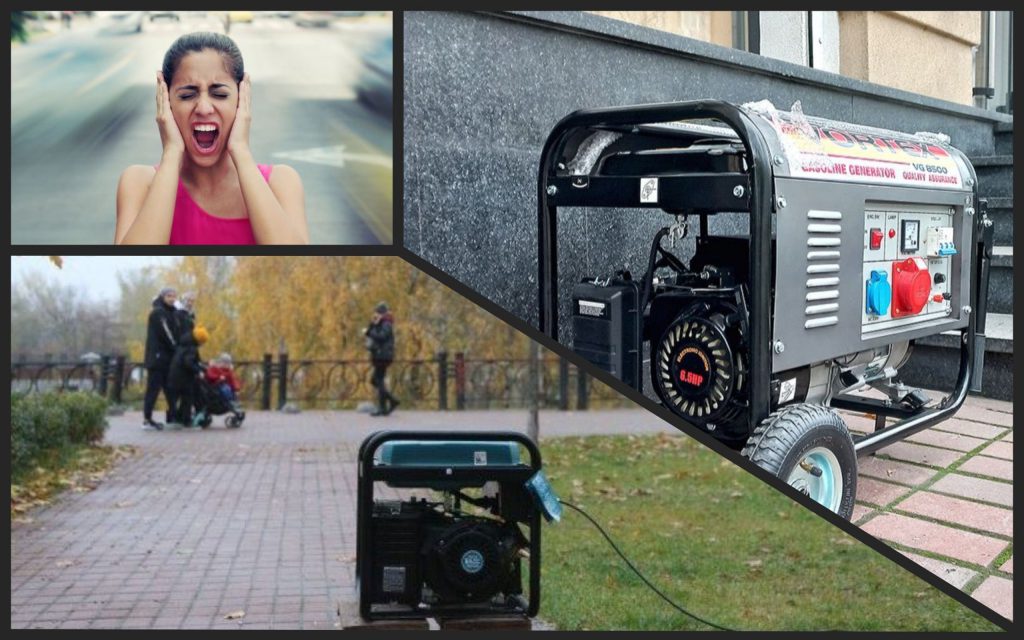
Modern cities are increasingly facing the problem of noise pollution, and generators have become one of its sources. They provide backup or continuous power supply for private homes, businesses, and important infrastructure facilities. However, excessive noise from a generator can become a serious cause of conflicts between neighbors and negatively affect residents’ quality of life. This is especially relevant in densely built-up areas, where even properly installed equipment can be clearly heard. So what standards exist, and how can they be followed?
What noise levels are considered acceptable
In Ukraine and most European countries, noise regulations for residential areas are generally similar. During daytime, the permissible level is usually up to 55 dB, and at night — up to 45 dB. To put these numbers into perspective: 55 dB is the noise of an office air conditioner or a calm conversation, while 45 dB is roughly the noise level in a quiet park in the evening.
Most generators, including industrial models, significantly exceed these values in their basic configuration. Depending on the type of equipment, noise levels may range from 65 to 100 dB, which is comparable to road traffic or even a motorcycle. This is why compliance with noise standards requires a comprehensive approach.
Why generators are so loud?
Noise is produced by the operation of the internal combustion engine, vibrations of the housing, and the exhaust system. Industrial generators, despite their high performance, can generate substantial acoustic pressure if they are not equipped with additional soundproofing elements. Gas power stations are usually quieter than diesel or gasoline units because their engines operate more smoothly, but even they may violate noise limits in densely populated areas.
How to reduce generator noise
To ensure a generator operates without disrupting residents’ comfort, several solutions can be applied:
Soundproof enclosure Modern models often come with a special casing that reduces noise by 10–20 dB. This is especially important for gas power stations, which frequently operate continuously in country homes.
Additional mufflers Installed on the exhaust system, they effectively reduce noise levels even in industrial generators. This helps bring equipment operation closer to regulatory standards.
Anti-vibration mounts Vibrations are one of the main sources of noise. Proper mounting significantly reduces resonance transmitted to the ground or foundation.
Sound-insulated chambers or containers In large houses or commercial facilities, the generator is often placed in special containers with sound-absorbing materials. This is a costly but extremely effective method.
Proper equipment placement The distance to living spaces matters. The farther away — the better. If possible, installing the generator behind the building, near utility structures, or in a technical zone greatly reduces noise for neighbors.
Can noise be eliminated completely?
Completely — no, but it can be made nearly unnoticeable. Modern gas power stations offer an excellent balance: high efficiency, long service life, and low noise levels. Industrial generators can also operate within acceptable limits if they are equipped with proper noise-control systems.
Noise from a generator is not only a technical issue but also a social one. Adhering to noise standards is crucial for maintaining a comfortable living environment and preventing conflicts. Timely use of enclosures, mufflers, proper placement, and choosing energy-efficient solutions such as gas power stations allows even industrial generators to operate without excessive noise pollution.
When selecting equipment and planning installation, it’s important to consider regulations and the needs of neighbors — then the generator will become a reliable assistant rather than a source of discomfort.
How to choose a reliable generator supplier in Ukraine
When electricity is essential for the uninterrupted operation of a business, production facility, office, or private home, a generator becomes more than just additional equipment — it becomes part of the power supply system. The reliability of the generator affects equipment operation, product safety, people’s comfort, and even the safety of certain processes. However, choosing […]
Generator for a farm: key selection considerations
For a farm, electricity is not just a matter of comfort but an essential condition for stable operations. Pumps, ventilation systems, refrigeration equipment, lighting, automation systems, grain dryers, and other machinery can operate only with a reliable power supply. A prolonged power outage can disrupt production processes, lead to product spoilage, and cause financial losses. […]
How to choose a generator for a private house with solar panels
Solar panels allow a private house to partially or fully cover its electricity needs without constant dependence on the grid. However, even a well-designed solar power system has its limitations. At night, there is no solar generation, panel output decreases in cloudy weather, and in winter, daylight hours are significantly shorter. If electricity is needed […]



 Kyiv
Kyiv
