Mobile Generators: The best models for construction
Home >
Blog >
Mobile Generators: The best models for construction
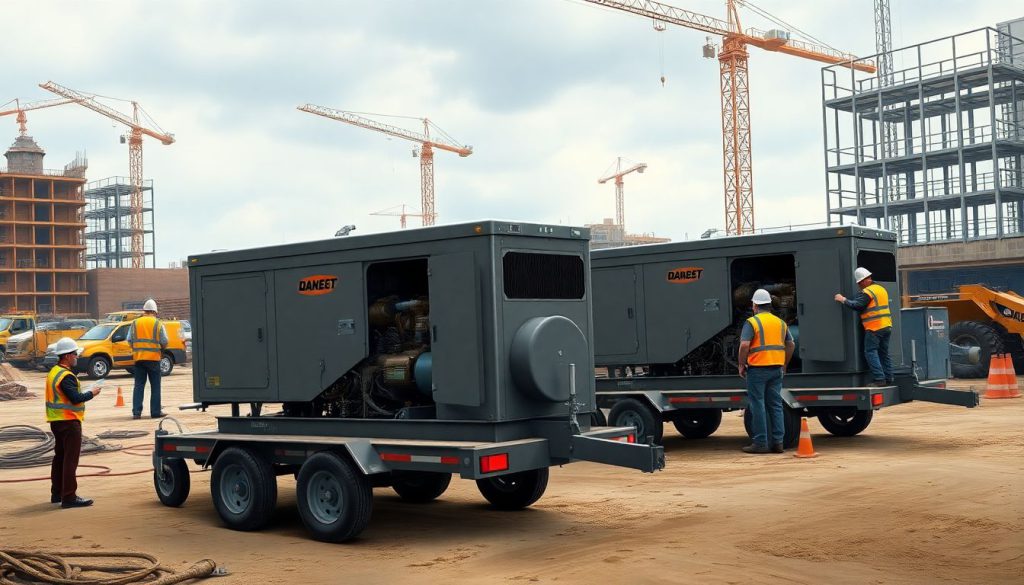
Construction is an industry where uninterrupted power supply plays a critical role. From powering tools and lighting to running heavy machinery — everything depends on a stable source of electricity. However, many construction sites are located far from centralized power grids or face unstable energy supply. That’s where mobile generators become indispensable.
In particular, industrial diesel generators stand out for their high performance, reliability, and long operating time. In this article, we’ll explain why they are essential for construction and review some of the best models worth considering.
Why Construction Needs Mobile Generators
Modern construction sites rely on various types of equipment:
concrete mixers and compactors;
drills, jackhammers, and grinders;
water pumps;
lighting systems;
ventilation and heating units.
When the site lacks access to the power grid or the supply is unstable, mobile generators are the only solution.
2. Advantages of Industrial Diesel Generators
While gasoline and gas-powered generators are available, industrial diesel generators are the preferred choice for construction sites due to several key benefits:
High power output. Suitable for both small tools and heavy machinery, including compressors and lifts.
Fuel efficiency. Diesel fuel is cheaper than gasoline, and diesel engines consume less over extended periods.
Reliability. Diesel engines handle heavy loads better and can operate for hours without overheating.
Durability. High-quality industrial generators are built to last, even under extreme working conditions.
Safety. Diesel fuel is less flammable than gasoline, which is an important factor on construction sites.
How to Choose the Right Generator for Construction
Before buying a generator, consider the following key factors:
Power capacity. Calculate the total power consumption of all tools and machines. For small sites, a generator with 5–10 kW is sufficient; for large-scale projects, choose 30 kW or more.
Starting system. For powerful diesel units, an electric starter or automatic start system is more convenient.
Mobility. Look for models with wheels or frames for easier transportation.
Noise level. If construction takes place near residential areas, opt for a generator with a soundproof enclosure.
Fuel tank capacity. A larger tank ensures longer runtime without frequent refueling.
How to Extend the Life of Your Generator
Even the most reliable generator needs proper maintenance:
regularly check oil and fuel levels;
clean air and fuel filters from dust and debris;
avoid operating at maximum load for long periods;
perform scheduled servicing according to the manufacturer’s guidelines.
Proper care ensures optimal performance and prevents costly breakdowns.
On construction sites, a stable power supply ensures that tools, machines, and lighting operate without interruption. That’s why industrial diesel generators are often the top choice for large projects: they are powerful, reliable, and cost-effective. For smaller construction sites, compact mobile models may be enough, but for large-scale operations, investing in a high-capacity diesel generator is the smarter decision.
The right generator guarantees that your construction project stays on schedule — even when there’s no access to external power sources.
How to choose a reliable generator supplier in Ukraine
When electricity is essential for the uninterrupted operation of a business, production facility, office, or private home, a generator becomes more than just additional equipment — it becomes part of the power supply system. The reliability of the generator affects equipment operation, product safety, people’s comfort, and even the safety of certain processes. However, choosing […]
Generator for a farm: key selection considerations
For a farm, electricity is not just a matter of comfort but an essential condition for stable operations. Pumps, ventilation systems, refrigeration equipment, lighting, automation systems, grain dryers, and other machinery can operate only with a reliable power supply. A prolonged power outage can disrupt production processes, lead to product spoilage, and cause financial losses. […]
How to choose a generator for a private house with solar panels
Solar panels allow a private house to partially or fully cover its electricity needs without constant dependence on the grid. However, even a well-designed solar power system has its limitations. At night, there is no solar generation, panel output decreases in cloudy weather, and in winter, daylight hours are significantly shorter. If electricity is needed […]



 Kyiv
Kyiv
