Generators for medical facilities: special requirements
Home >
Blog >
Generators for medical facilities: special requirements
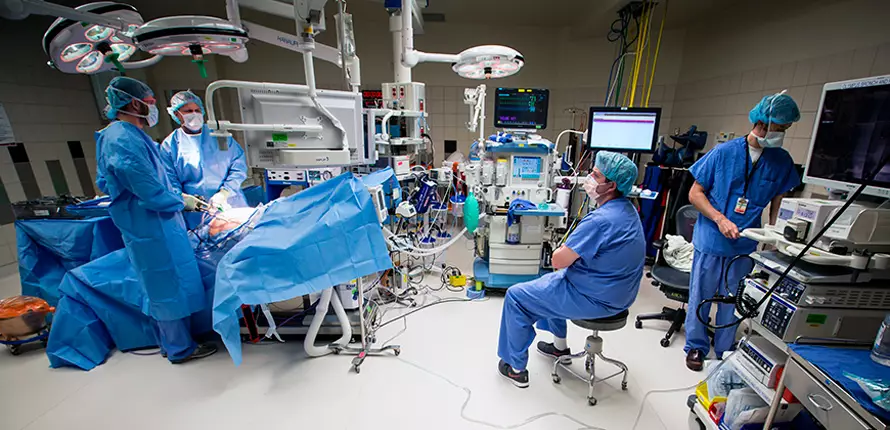
Modern medicine is impossible without stable electricity. The operation of ventilators, resuscitation equipment, laboratories, and operating rooms directly affects patients’ lives. Any, even short-term, power outage can have fatal consequences. That’s why generators for medical facilities are not just an additional power source — they are a mandatory part of the safety system.
Why hospitals need generators
In case of an emergency power outage, backup power must activate automatically within seconds. In an operating room or intensive care unit, even a minute without electricity can mean the shutdown of life-support equipment. For this reason, industrial diesel generators or gas generators are installed in every modern hospital, maternity ward, and medical center.
Generators ensure the operation of critical systems such as:
lighting in operating rooms and intensive care units;
laboratory and diagnostic equipment;
ventilation and air conditioning systems;
refrigeration units for storing medicines and vaccines;
servers that store patient medical data.
Key requirements for generators in healthcare facilities
Hospitals and clinics have strict safety standards, so the requirements for generators are higher than in most other industries.
Uninterrupted power supply. The generator must start automatically using an ATS (Automatic Transfer Switch). This guarantees that medical equipment won’t stop working even for a few seconds.
Power quality. Medical devices are extremely sensitive to voltage fluctuations. Generators must provide stable current without frequency or voltage drops. Models with inverter technology or high-quality stabilizers are often used.
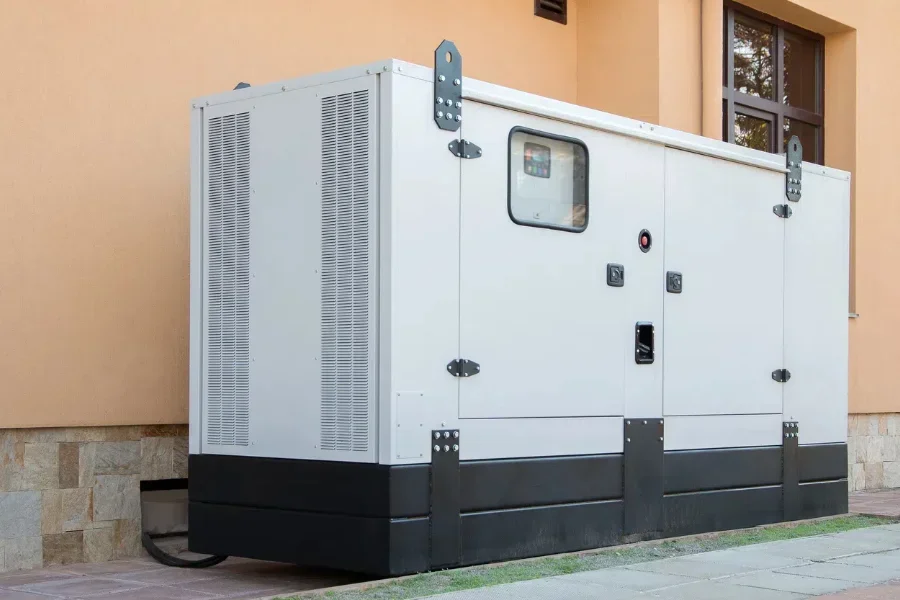
Safety and environmental standards. Hospitals require low noise levels and minimal air pollution. Therefore, generators are installed in soundproof enclosures or isolated, ventilated rooms.
Reliability and long operation time. During extended blackouts, the generator must be able to operate for hours or even days. Industrial diesel generators are known for their durability and ability to handle heavy loads.
Regular maintenance. Continuous inspection, test runs, and fuel monitoring are mandatory. Hospitals keep maintenance logs, and staff receive special training to operate the equipment safely.
Diesel or gas: which is better?
Both industrial diesel generators and gas generators are widely used in the medical field, but each has its own strengths.
Diesel generators are the most common choice. They are powerful, reliable, and start quickly in any weather. Diesel fuel can be easily stored on-site, and maintenance is relatively simple. The main drawback is noise and emissions, though modern models have significantly reduced both.
Gas generators are quieter and more eco-friendly. They are ideal for hospitals in urban areas with access to stable gas supply. Gas systems are economical, require less maintenance, and can run almost continuously. Their downside is dependence on a gas pipeline.
How to choose the right generator for a medical facility
When selecting a generator, it’s important to consider:
the total power demand of all critical systems;
the duration of required autonomous operation;
acceptable noise and vibration levels;
fuel availability;
safety and ventilation requirements.
Large hospitals often install a two-tier backup system — a main high-power diesel or gas generator and a smaller reserve unit. This ensures uninterrupted power even if one generator fails.
Professional installation and maintenance — the key to safety
It’s crucial to entrust generator installation and setup to professionals. Incorrect wiring or improper placement can cause overheating, exhaust leaks, or even fire hazards.
Routine maintenance, filter replacement, and monitoring oil and fuel levels guarantee stable operation. Many modern hospitals use automated monitoring systems that remotely track generator performance and send alerts about potential issues.
For medical facilities, a generator is not just a piece of equipment — it’s a guarantee of patient safety and uninterrupted staff work. Choosing between industrial diesel generators and gas generators depends on operating conditions, fuel availability, and environmental requirements.
Reliable backup power is not a luxury — it’s a vital necessity for every hospital, because in medicine, every second matters.
How to choose a reliable generator supplier in Ukraine
When electricity is essential for the uninterrupted operation of a business, production facility, office, or private home, a generator becomes more than just additional equipment — it becomes part of the power supply system. The reliability of the generator affects equipment operation, product safety, people’s comfort, and even the safety of certain processes. However, choosing […]
Generator for a farm: key selection considerations
For a farm, electricity is not just a matter of comfort but an essential condition for stable operations. Pumps, ventilation systems, refrigeration equipment, lighting, automation systems, grain dryers, and other machinery can operate only with a reliable power supply. A prolonged power outage can disrupt production processes, lead to product spoilage, and cause financial losses. […]
How to choose a generator for a private house with solar panels
Solar panels allow a private house to partially or fully cover its electricity needs without constant dependence on the grid. However, even a well-designed solar power system has its limitations. At night, there is no solar generation, panel output decreases in cloudy weather, and in winter, daylight hours are significantly shorter. If electricity is needed […]



 Kyiv
Kyiv
