DGU Synchronization
Several diesel generators (DGUs) can operate as a single system – in synchronization mode, which allows increasing power supply reliability, increasing power and ensuring uninterrupted operation under variable loads.
Power plant synchronization methods
01 Manual – operator manually adjusts parameters before connecting the generator;
02 Automatic – uses a control system that synchronizes generators by frequency, phase and voltage automatically.
Basic principles of DGU synchronization
01 Frequency matching – all generators must operate at the same frequency (50 Hz in Ukraine);
02 Phase matching – voltages of all generators must match in phase;
03 Voltage matching – voltage levels must be the same to avoid power flow between generators;
04 Phase angle compliance – the moment of switching on a new generator must be in the correct phase relative to already operating generators.
Advantages of using power plants in synchronous operation
01 Increasing power system capacity by combining generators;
02 Even load distribution between DGUs;
03 Ability to disconnect one generator for maintenance without stopping the entire system;
04 Fuel savings at low loads (possible to turn off one of the generators).
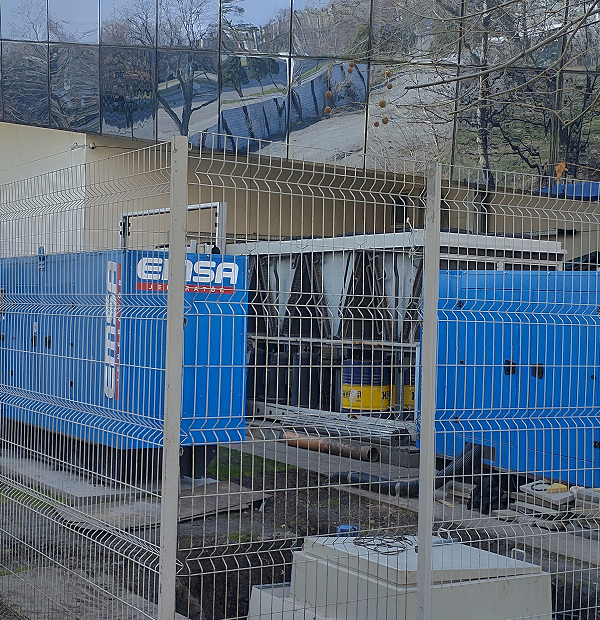
Specialists at “DAREKS TRADING SOLUTIONS” company have extensive experience in implementing projects for synchronizing power plants into a unified energy complex. An example of this is the modernization of the independent power supply system of “KUB” Business Center in Dnipro city! In this business center, the operation of two “EMSA” brand diesel generators was synchronized. One with a DEUTZ engine with nominal power of 211 kW, the other with a BAUDOUIN engine with power of 231 kW.
The autonomous power supply modernization project included:
01 delivery of additional DGU to the facility;
02 generator installation;
03 commissioning work;
04 synchronization of two power plants.
“DAREKS TRADING SOLUTIONS” specialists completed all installation and commissioning work in the shortest time, familiarized responsible specialists with the rules of operating two DGUs in synchronization and provided the customer with a complete set of necessary documents.
Share 
you may also be interested in




 Kyiv
Kyiv
