Connecting a Generator to a Heating Boiler: A Complete Practical Guide
Home >
Blog >
Connecting a Generator to a Heating Boiler: A Complete Practical Guide
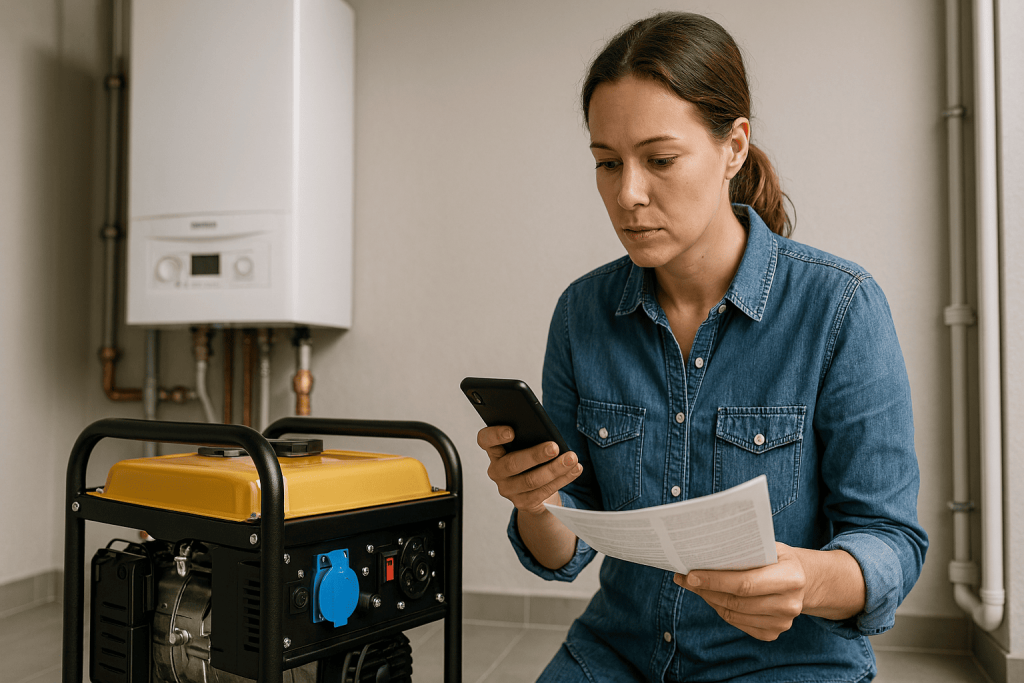
During power outages, heating autonomy becomes critically important. Even a modern gas boiler cannot operate without electricity — the circulation pump, automation system, and control board all require stable power. Therefore, properly connecting a generator to a heating boiler is a matter of safety, comfort, and system protection.
In this article, we will cover:
which generators are suitable for boilers,
how to correctly calculate required power,
connection diagrams,
grounding requirements,
common mistakes that can damage your boiler.
This guide is useful for private homeowners, cottage owners, and small commercial property operators.
Why You Can’t Just “Plug It In”
The most common mistake is connecting a boiler directly to a generator without considering technical nuances.
Modern boilers are sensitive to:
sine wave quality,
voltage stability,
correct phase configuration,
proper grounding.
Unstable voltage can cause:
automation lockouts,
control board errors,
circulation pump failure.
That’s why it’s important not only to buy generators, but to properly integrate them into your home’s electrical system.
What Generator Power Is Required for a Boiler?
Most residential gas boilers consume:
100–200 W in normal operation,
up to 300–500 W during pump startup.
However, if you also plan to power:
a refrigerator,
lighting,
a security system,
a water pump,
you need to calculate the total load with a 20–30% safety margin.
For a typical private house, generators for home use with a capacity of 2–5 kW are usually sufficient. However, the exact requirement depends on the number of connected appliances.
Which Type of Generator Is Best for a Boiler?
1. Inverter Generator
✔ Perfect sine wave ✔ Stable voltage ✔ Safe for sensitive electronics
The best option for modern boilers with delicate control boards.
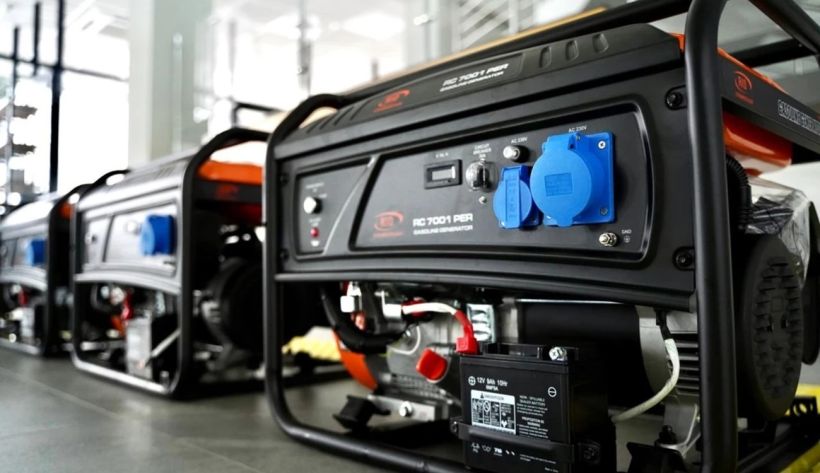
2. Conventional Gasoline Generator
Suitable if it:
has an AVR (automatic voltage regulator),
provides stable 220V output,
has properly organized grounding.
3. Diesel Generator
Diesel generator ideal for long operating hours and larger homes. Especially relevant if the generator is used not only for the boiler but for full backup power supply.
Generator-to-Boiler Connection Schemes
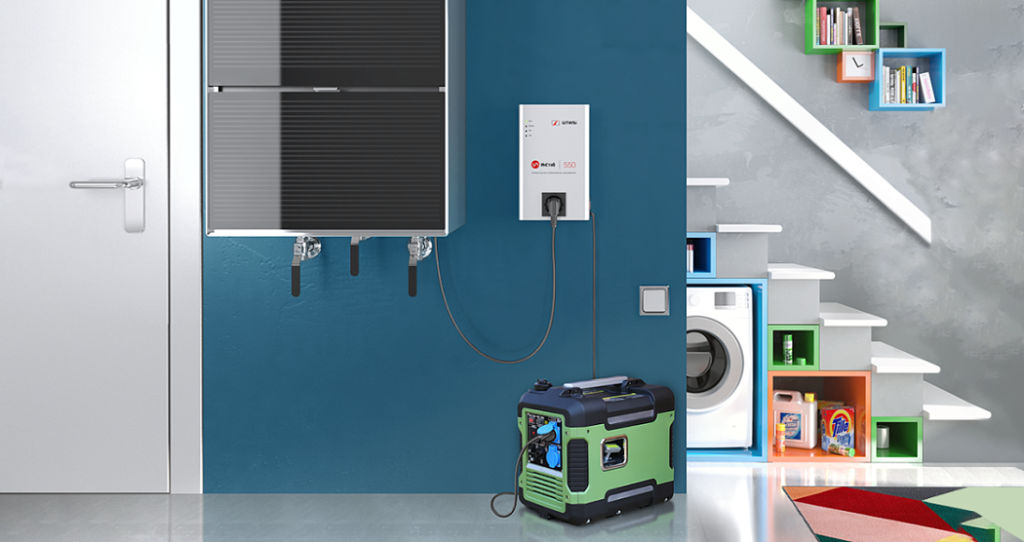
🔹 Option 1: Through a Separate Outlet (Temporary Solution)
Utility grid ↔ transfer switch ↔ generator → distribution panel → boiler.
Advantages:
safe switching,
prevents back-feeding into the grid,
protects your electrical system.
🔹 Option 3: Through an ATS (Automatic Transfer Switch)
The safest and most convenient solution.
When power goes out:
the system automatically starts the generator,
switches the load,
returns to normal mode when utility power is restored.
For permanently occupied homes, this is the optimal option.
Grounding — Critically Important
Many boilers monitor phase and neutral connections. If the generator has a “floating neutral,” the automation system may display an error.
Proper solution:
install a grounding system,
correctly configure the neutral,
follow the boiler manufacturer’s requirements.
Improper grounding can cause:
operational failures,
electric shock hazards,
control board damage.
Is a Voltage Stabilizer Necessary?
If the generator is inverter-based — usually no. If it is a conventional model — installing a stabilizer is recommended, especially for expensive boilers.
Stable voltage = longer lifespan of the control board.
Common Connection Mistakes
Connecting without a transfer switch or ATS
Lack of proper grounding
Using low-quality extension cords
Incorrect power calculation
Connecting a three-phase generator to a single-phase system without proper load balancing
Such mistakes may cost more than the generator itself.
Can You Connect It Yourself?
Theoretically — yes, if you understand electrical installation principles.
Practically — it is better to hire a qualified electrician who will:
properly install the transfer switch or ATS,
check phase configuration,
organize grounding,
test the system under load.
This ensures safety and stable operation.
Connecting a generator to a heating boiler is a technically responsible process that directly affects comfort and warmth in your home. It is important not only to select the correct power capacity but also to ensure proper voltage quality, grounding, and system integration.
A properly selected and installed generator provides:
✔ uninterrupted heating operation ✔ protection for boiler electronics ✔ comfort during power outages ✔ energy independence
If you are planning to install a backup power solution, take a comprehensive approach — from equipment selection to professional installation. Only this guarantees long-term, safe, and reliable system performance.
Connecting a Generator to a Heating Boiler: A Complete Practical Guide
During power outages, heating autonomy becomes critically important. Even a modern gas boiler cannot operate without electricity — the circulation pump, automation system, and control board all require stable power. Therefore, properly connecting a generator to a heating boiler is a matter of safety, comfort, and system protection. In this article, we will cover: This […]
Generator Oil Change: How Often and Which Oil to Choose
The stable operation of a generator directly depends on proper maintenance. The key element of that maintenance is timely oil replacement. Engine oil protects internal components from wear, overheating, and premature failure. In this article, we will cover: This material is useful both for homeowners and for businesses where a generator is a critical part […]
The Most Common Mistakes When Choosing a Generator
During power outages, a generator stops being an “option” and becomes a necessity. However, in practice, many buyers encounter problems after installation: unstable operation, excessive fuel consumption, overloads, or even equipment failure. The reason is simple — mistakes made at the selection stage. In this article, we will examine the most common mistakes when choosing […]





 Kyiv
Kyiv
